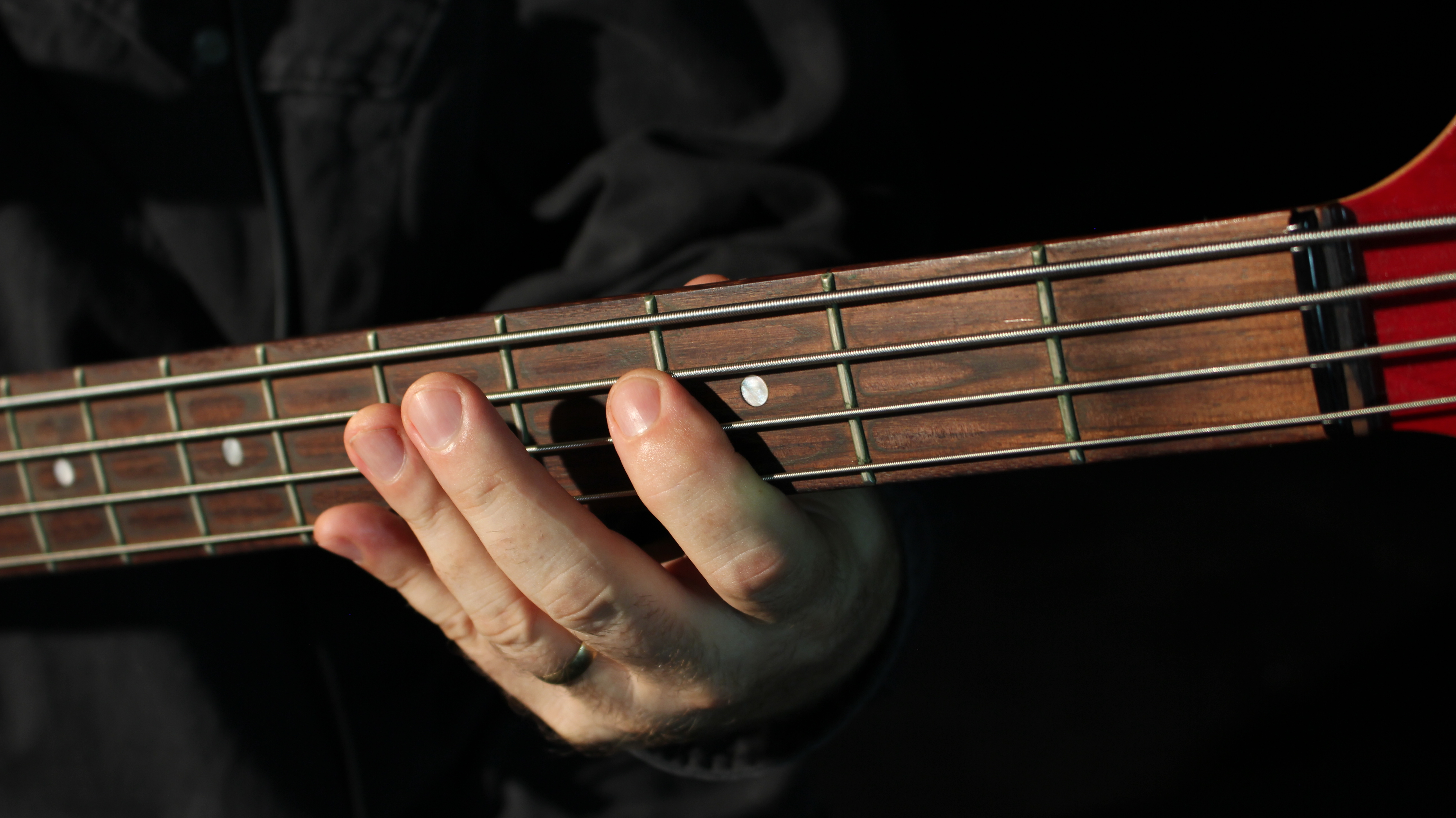
Most of the chords found in the open position can be moved up the fret board to become new chords. The following are examples of what is possible with the D or Dm chords. To read these diagrams the vertical lines are strings and the horizontal lines are frets. The left most string is the thickest string.
0 is the open strings and the frets are numbered.
You could literally play most popular songs, to some degree with the D Major and D Minor shapes below. The Dsus4 adds interest as a passing chord.
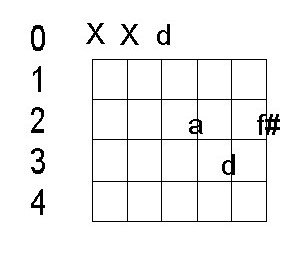
Open – G Major
Open – C Major
Fret 1 – C#/Db Major
Fret 2 – D Major
Fret 3 – D#/Eb Major
Fret 4 – E Major
Fret 5 – F Major
Fret 6 – F#/Gb Major
Fret 7 – G Major
Fret 8 – G#/Ab Major
Fret 9 – A Major
Fret 10- A#/Bb Major
Fret 11- B Major Fret 12- C Major
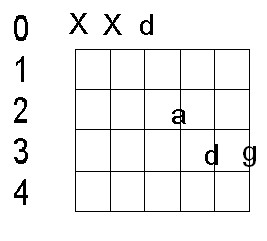
Open – C sus4
Fret 1 – C#/Db sus4
Fret 2 – D sus4
Fret 3 – D#/Eb sus4
Fret 4 – E sus4
Fret 5 – F sus4
Fret 6 – F#/Gb sus4
Fret 7 – G sus4
Fret 8 – G#/Ab sus4
Fret 9 – A sus4
Fret 10- A#/Bb sus4
Fret 11- B sus4
Fret 12- C sus4
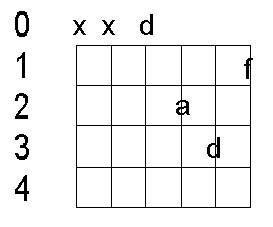
Open – C#/Db Minor
Fret 1 – D Minor
Fret 2 – D#/Eb Minor
Fret 3 – E Minor
Fret 4 – F Minor
Fret 5 – F#/Gb Minor
Fret 6 – G Minor
Fret 7 – G#/Ab Minor
Fret 8 – A Minor
Fret 9 – A#/Bb Minor
Fret 10- B Minor
Fret 11- C Minor
Fret 12- C#/Db Minor
Using the chord shapes above play the following chord progressions.
i)
| C | G | F | Em |
(D on fret 12) (D on fret 7) (D on fret 5) (Dm on fret 3)
Now try these yourself
ii)
| D | A | G | Bm |
iii)
| F | Am | C | Gm |
iv)
| Bb | Dm | Gm | Eb |
 All Things Musical.